[ Package conformance ]
Expo SDK · >=12.0.0
expo-sms
native-seam: the upstream expo-sms JS (SMS.js wrapper, attachment processing, argument validation, the {result} resolution path) runs unchanged from the bundle; only the ExpoSMS expo module is ours, mirroring ExpoSMSModule.swift on the reference iOS Simulator EXACTLY — isAvailableAsync returns false because MFMessageComposeViewController.canSendText() is false on the Simulator, and sendSMSAsync throws the verbatim SMSUnavailableException reason "SMS service is not available" (the !canSendText() guard). this IS the complete faithful contract on the reference device: the iOS Simulator genuinely cannot send SMS, so an app calling expo-sms there already gets exactly this. same faithful "the platform/sim cannot do this, and that is correct" tier as react-native-exit-app / expo-local-authentication.85%
API coverage

← iOS|Peach →
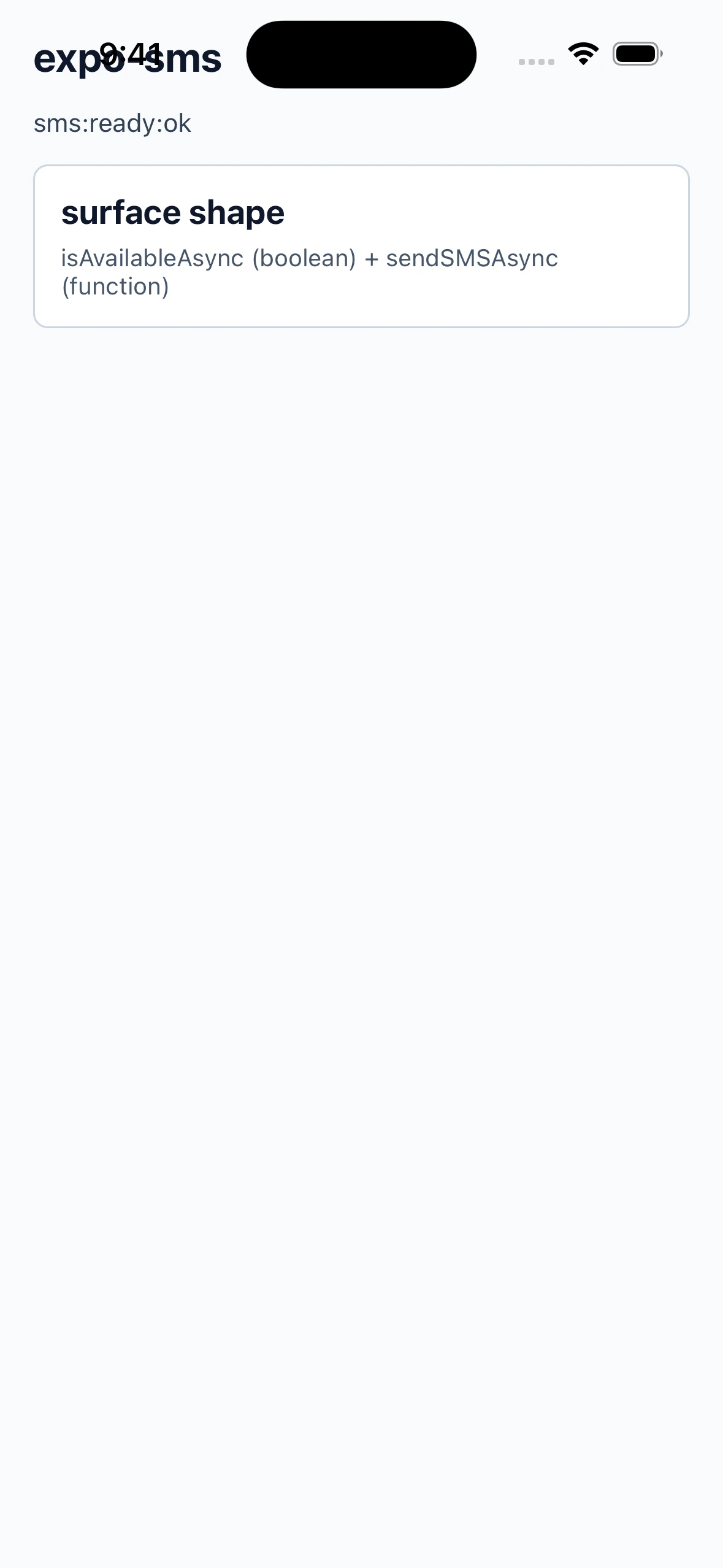
expo-smsExpo Smsexpo-sms surface — isAvailableAsync (boolean) + sendSMSAsync (function). renders `sms:ready:ok`.
Diff0.25%
DeviceiPhone 16
OracleiOS
CapturedMay 13, 2026
iOSPeachDiff
Working (2)
isAvailableAsync (false — exact MFMessageComposeViewController.canSendText() on the Simulator)sendSMSAsync (rejects with the verbatim SMSUnavailableException reason); real upstream wrapper handles argument validation/attachment processing and would resolve {result:"sent"|"cancelled"|"unknown"} on a device that can send
Missing (1)
no real Messages compose UI can present — but neither can the reference iOS Simulator (MFMessageComposeViewController.canSendText() is false there); a real send path needs physical SMS capability the Simulator and browser alike do not expose